Uncategorized

Uncategorized

What Is Instrument Rating (IR)? A Complete DGCA Guide for Student Pilots

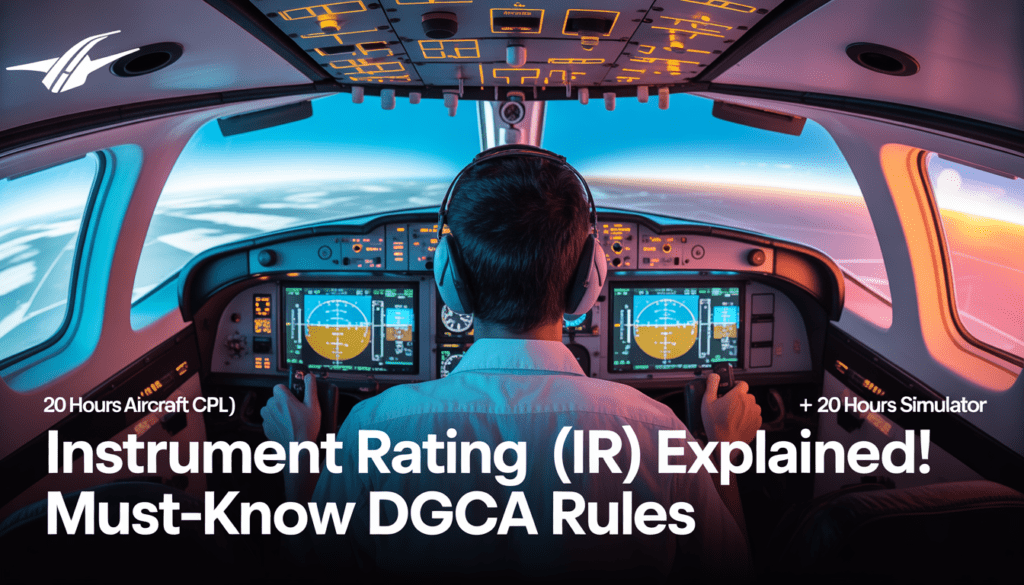
What Is Instrument Rating (IR)? A Complete DGCA Guide for Student Pilots An Instrument Rating (IR) is one of the most important add-ons to your flying career. It allows a pilot to fly safely using only instruments, without outside visual reference—crucial for airline operations, bad weather, and IFR flight. If you plan to join an airline or build a strong aviation foundation, getting your IR early is a smart decision. This guide explains IR requirements, DGCA rules, flight hour requirements, simulator allowances, cross-country requirements, and validity criteria — everything simplified for student pilots in India. What Is Instrument Rating? An Instrument Rating authorizes a pilot to fly under Instrument Flight Rules (IFR). This means navigating, controlling, and operating the aircraft using cockpit instruments only. It trains you to handle clouds, bad visibility, and complex airspace professionally. IR is mandatory for anyone aiming for: ✔ Airline jobs ✔ Multi-engine IFR operations ✔ Advanced flying roles ✔ Safer all-weather flying DGCA Requirements for Instrument Rating (2025 Latest) DGCA has clear requirements for flight time, instrument time, simulator use, and cross-country experience. Here’s everything you must know. 1. Instrument Flying Requirement – 50 Hours Total DGCA requires 40 hours of instrument time. Breakup of Instrument Hours Minimum 20 hours must be done on an actual aircraft. Remaining 20 hours can be completed on an approved simulator. Using a simulator for 20 hours makes IR training far more cost-efficient, while still meeting DGCA standards. Recent Instrument Hours Requirement Minimum 5 hours of instrument time must be completed within 6 months before applying for the IR. 2. Cross-Country Requirement for IR To apply for Instrument Rating: ✔ Minimum 40 Hours PIC Cross-Country (Mandatory) You must complete not less than 40 hours of cross-country flight time as Pilot-in-Command (PIC). ✔ 300 NM Cross-Country Flight Requirement Your PIC cross-country record must include: One cross-country flight of at least 300 nautical miles, With full-stop landings at two different aerodromes. ✔ Important DGCA Rule (Most Students Miss This!) For ANY cross-country to count: ➡️ The distance between point of departure and destination or overflown point MUST be more than 100 NM. ➡️ Anything less than 100 NM will not be counted by DGCA. This is one of the most common reasons applications get delayed — so plan your PIC flights properly. Why Instrument Rating Is So Important IR training builds critical skills like: Handling low-visibility conditions Navigating using instruments alone Understanding IFR procedures Conducting precision/non-precision approaches Operating safely in controlled airspace Airlines give higher preference to CPL holders with strong IR training because it shows discipline, precision, and confidence. Best Time to Get Your Instrument Rating You should complete your IR immediately after CPL or during time-building, because: Your instrument flying skills stay fresh Your simulator hours stay valid IR is required for airline entrance exams and Type Rating Delaying IR increases cost and effort Final Thoughts Instrument Rating is one of the most valuable qualifications in your flying journey. By planning your cross-country flights correctly and utilizing simulators effectively, you can complete your IR efficiently and economically. A well-completed IR not only improves your safety and confidence but also brings you a step closer to airline flying.
Uncategorized

Why Every Student Pilot Should Do Simulator Training Before Starting Flying (Complete Guide for CPL Aspirants)

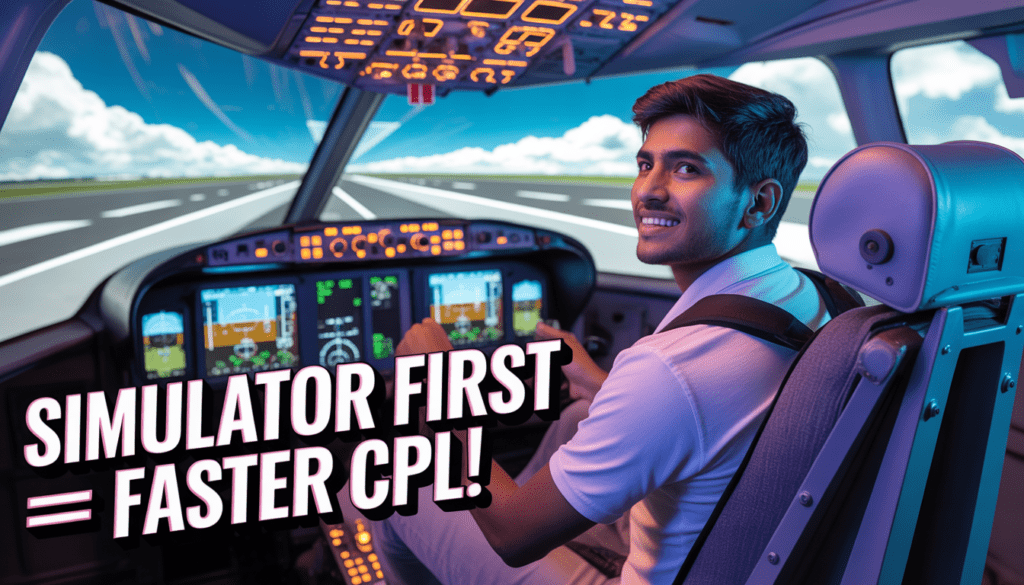
Why Every Student Pilot Should Do Simulator Training Before Starting Flying (Complete Guide for CPL Aspirants) Starting your flight training is one of the biggest milestones in your aviation journey. But before you jump into the cockpit, there is one step that can dramatically improve your skills, confidence, and safety — Simulator Training. In India and abroad, more and more students are choosing to complete basic and advanced simulator sessions before their first flying hour, and the benefits are massive. This blog explains why sim training is essential, how it helps you score higher in DGCA exams, how it reduces flying cost, and which simulators are ideal for beginner pilots. What Is Simulator Training for Student Pilots? Simulator training involves practicing real-world flying scenarios on a certified flight simulator. These devices replicate aircraft controls, instruments, environment, and ATC communication — allowing you to learn without burning flying hours. Before starting real flying, simulator training helps you: Understand cockpit layout Learn basic handling Practice checklists Build confidence Reduce fear or overwhelm Save money by reducing mistakes during early flying Why You MUST Do Simulator Training Before Starting Flying 1. Faster Learning Curve When You Start Flying Students who start flying without simulator practice take longer to adjust to: Aircraft controls Radio calls Situational awareness Basic turns, climbs, and descents With simulator training, your first 10 hours of flying become MUCH easier because the basics are already practiced on the ground. 2. Saves You ₹50,000 to ₹2,00,000 in Flying Costs Every extra hour you need because of poor preparation costs money. When you know the basics from simulator practice: You make fewer mistakes Your instructor requires fewer hours to clear exercises Your learning becomes structured Sim training helps you avoid unnecessary repeat lessons, which saves lakhs in the long run. 3. Helps You Perform Better in DGCA CPL Exams Sim sessions strongly reinforce concepts in: Air Navigation Technical General Meteorology Flight Planning Instruments This makes the DGCA exams easier to understand and gives you a practical perspective while studying. 4. Improves Confidence & Reduces Anxiety for First-Time Flyers Many beginners feel nervous during the first few hours of flying. Simulator experience acts as a confidence booster because you already understand how the cockpit feels and responds. You enter flying with: Clear understanding Better hand-eye coordination Familiarity with instruments Muscle memory in controls 5. Perfect for Practicing Emergencies Without Any Risk In the air, emergencies cannot be practiced frequently.In a simulator, you can practice: Engine failure Radio failure Bad weather Navigation diversions System malfunctions This builds solid decision-making skills before you touch the aircraft. 6. Helps You Master Radio Telephony (RTR) Communication Simulator sessions often include: ATC calls Taxi instructions Takeoff clearance Circuit patterns Emergency communication This prepares you early for RTR Part 2, which is mandatory for CPL. 7. Helps You Identify Whether Flying Is Right for You Sim training gives you the closest possible experience to real flying.If you enjoy it and adapt quickly — flying will come naturally.If you feel overwhelmed — you can work on your weak areas before spending money on actual flying. How Many Simulator Hours Should You Do Before Flying? For new pilot students, the ideal range is: 10–20 hours of basic simulator training, and 10+ hours of procedural and advanced sim for Instrument Rating. This prepares you fully for your first few flight lessons and reduces your dependency on instructors. Best Types of Simulators for Beginner Pilots You can choose from: 1. Basic Procedural Trainers (Affordable) For learning: Checklists Engine start Taxi basics Basic IFR skills 2. 1:1 Scale Simulator (Highly Recommended) Closest to real aircraft flying with: Advanced navigation Emergencies Radio nav aids IFR practice 3. Full Motion Simulators (Premium) Ideal for advanced understanding but optional for beginners. When to Start Simulator Training? The best time is before flying — ideally just after starting your DGCA exams or right after finishing them. This way: Your theory + simulator + flying becomes perfectly aligned You save time, cost, and effort You avoid struggling with basic handling in the aircraft Final Thoughts Simulator training is one of the smartest investments a student pilot can make.It improves your learning curve, increases your confidence, sharpens your decision making, and reduces your overall flying cost. Before you begin your CPL flying journey — whether in India or abroad — 10–20 hours of sim training can save you money, time, and stress.

Uncategorized

CPL Done… What Next? Top Methods to Build Flying Hours Quickly & Affordably (India Guide)

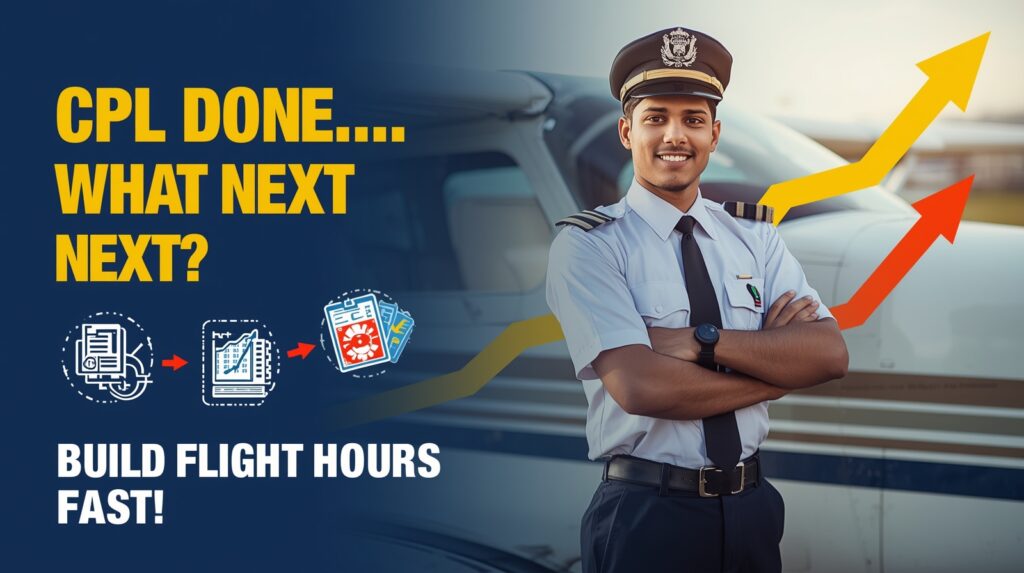
CPL Done… What Next? Top Methods to Build Flying Hours Quickly & Affordably (India Guide) So you’ve finally earned your Commercial Pilot Licence (CPL) — congratulations! But the journey doesn’t stop here. To qualify for airline applications and stay legally “current,” pilots must keep flying regularly and build sufficient hours, especially PIC (Pilot-in-Command) time. This blog explains the most effective, affordable, and realistic ways to build flying hours in India (and abroad) after getting your CPL. 1. Rent an Aircraft at a Flying Club (Most Common Option) After CPL, the simplest way to build hours is renting a single-engine aircraft at your flying school or local flying clubs. Rates usually range between ₹10,000 to ₹18,000 per hour depending on the aircraft model, state, and fuel cost. If you can join with classmates and plan structured cross-countries, you save time and cost. 2. Join Flight Schools as a Safety Pilot or Co-Pilot Many flight schools allow CPL holders to assist instructors during ferry flights, repositioning flights, or long navigation exercises. This helps you build hours at reduced cost — sometimes ₹5,000–₹8,000 per hour, depending on the school. 3. Time-Building Packages in India Some academies offer bulk flying hour packages where booking 50–100 hours together gives up to 10–20% discount. Great for building PIC hours fast, especially if you need 200 hours total for airline exams or interviews. 4. Hour Building Abroad (USA, South Africa, Philippines) Many Indian pilots go abroad because hour-building is cheaper and weather is better. Typical cost in the USA ranges from ₹7,000–₹12,000 per hour depending on the state and aircraft. Make sure the flying school abroad is DGCA-approved for logbook acceptance. 5. Become a Flight Instructor (Most Cost-Effective Long-Term Method) If you enjoy teaching, becoming an FI is one of the best ways to build hours — and get paid for flying. Instructor training costs around ₹8–12 lakh, but once hired, you can build hundreds of hours, which airlines value highly. 6. Apply for Ferry Flights (Great for Real-World Experience) Ferry flights involve repositioning an aircraft from one airfield to another. Some schools charge minimal or shared flying rates for these flights. You gain tons of navigation experience and long-route exposure. 7. Join Glider Clubs or Microlight Clubs Though gliders and microlights don’t count toward airline hours, they help maintain flying proficiency at very low cost — often ₹2,000–₹3,000 per flight. They also improve your stick-and-rudder skills significantly. 8. Group Flying With Friends Partnering with two or more CPL holders helps reduce hourly cost since you can split navigation task planning, rentals, fuel costs, and landing fees. This is common among pilots who want to complete cross-country requirements efficiently. 9. Volunteer at Flying Clubs or Tow-Plane Operations Some aviation clubs let CPL holders assist with ground briefings, towing operations, and admin work, which can give you discounted rates for flying hours. Not always guaranteed, but worth exploring. Additional Tips to Build Hours Smartly • Prioritize cross-country flights over local circuits — they build real experience.• Avoid long gaps; fly at least once every 60–90 days to stay current.• Maintain a clean, updated logbook — airlines check this carefully.• Don’t rush; build hours gradually with focused learning.• Choose aircraft with lower rental rates (152, 172, PA-28) for maximum savings. Final Thoughts Building flying hours after CPL can be expensive, but with the right strategy, you can do it efficiently and affordably. Whether you rent aircraft, instruct, fly abroad, or join ferry operations — consistency is key. Every flight hour is a step closer to your airline cockpit dream.

Uncategorized

DGCA CPL Subjects – Complete Guide (Syllabus, Books, Exam Pattern & Passing Marks)

DGCA CPL Subjects – Complete Guide (Syllabus, Books, Exam Pattern & Passing Marks) If you’re planning to become a Commercial Pilot in India, clearing the DGCA CPL theory exams is one of the first and most important steps. This guide covers every subject, the syllabus, the best books to study from, the exam duration, the number of questions, and the passing criteria — everything explained simply for student pilots. CPL Theory Subjects under DGCA To obtain a Commercial Pilot Licence in India, you must clear the following six DGCA theory papers, along with the RTR(A) exam conducted by WPC. Air Navigation Meteorology Air Regulations Technical General Technical Specific RTR(A) – Radio Telephony (Aero) These form the core knowledge required for safe flight operations and future airline preparation. 1. Air Navigation – Syllabus, Books & Exam Pattern Air Navigation is one of the most detailed DGCA subjects. The syllabus includes flight planning, time calculations (UTC, IST, LMT), great circle and rhumb line navigation, position fixing, radio navigation aids like VOR, DME, ADF, ILS, and the use of aviation charts. Students also learn drift correction, ETA/ETD calculations, fuel planning, and basic instrument navigation. For this subject, the best books are RK Bali (Air Navigation), Oxford Navigation, and Keith Williams.. Ground school notes are also highly recommended. The exam usually has around 100 multiple-choice questions, the duration is three hours, and the passing mark is 70%. Since there is no negative marking, students should attempt all questions. CX -3 and scientific calculator is allowed 2. Aviation Meteorology – Syllabus, Books & Exam Details Meteorology covers the atmosphere, pressure systems, winds, temperature variations, cloud formation, stability and instability, fronts, jet streams, thunderstorms, icing, fog, turbulence, and aviation weather forecasting. Students also learn how to interpret METARs, TAFs, wind charts, significant weather charts, and upper-air charts. Recommended books include I.C Joshi, Oxford and notes from reputable DGCA ground schools. The exam generally contains 50 MCQs, and the time given is two hours. The student must score 70% or more to pass. This exam is theory-heavy but scoring if concepts are clear. Scientific calculator not allowed.  3. Air Regulations – Syllabus, Books & Exam Pattern Air Regulations covers Conventions, Indian aviation laws, ICAO rules, airspace classification, pilot responsibilities, licensing rules, flight rules, ATC procedures, aircraft registration, enforcement procedures, emergencies, and search and rescue. The best reference is RK Bali Air Regulations, along with DGCA’s own CARs (Civil Aviation Requirements) and mock test guides. The exam contains 50 MCQs, lasts two hours, and requires a minimum of 70% for passing. This is considered one of the crucial DGCA subjects if studied correctly. 4. Technical General Technical General includes aerodynamics, forces acting on an aircraft, stability, aircraft structures, systems (fuel, electrical, hydraulics, environmental, avionics), electrical piston and turbine engines and propellers. Top books include Oxford, Electrics, Airframes and Systems, Powerplant & Principle of Flights The exam generally has about 100 questions, with a duration of three hours, and the passing mark is 70%. This is one of the more detailed subjects, requiring consistent study and conceptual understanding. 5. Technical Specific (Aircraft Type Specific) Technical Specific is based on the specific aircraft you have flown during your CPL training. The syllabus includes that aircraft’s systems, performance charts, operating limitations, weight and balance, fuel system, emergency procedures, and avionics. The only book required is the aircraft’s POH (Pilot Operating Handbook) or AFM (Aircraft Flight Manual). Ground school modules for the specific aircraft type are also important. The exam usually contains 50 questions, lasts two hours, and passing requires 70% or higher. 6. RTR(A) – Radio Telephony RTR(A) is now conducted by DGCA. The exam checks your radio communication skills, aviation phraseology, emergency communication, and ability to handle real-time ATC situations. It includes a written examination, followed by a viva and practical test. Study material includes WPC’s RTR syllabus, aviation communication manuals, and plenty of practice of standard phraseology. There is no fixed percentage marking; it is pass or fail based on your performance. Exam Validity & Attempt Rules Once you pass a DGCA subject, your result remains valid for 5 years toward CPL issue. Students may retake any failed subject as many times as needed because there is no attempt limit. Since DGCA exams do not have negative marking, it is always advisable to attempt every question. Preparation Strategy for DGCA CPL Exams Aviation subjects require both understanding and practice. Navigation and Technical General need regular numerical practice, while Regulations and Meteorology require conceptual clarity. Students are advised to join a good ground school, follow a structured timetable, and solve plenty of mock tests. Always revise RK Bali, Jeppesen, and Oxford materials thoroughly. Mock tests help with time management, and reviewing DGCA CARs is essential for the Regulations paper. For RTR(A), students should practice listening and speaking daily using sample ATC scenarios. Final Thoughts The DGCA CPL exams may seem challenging at first, but with the right books, a disciplined study plan, and consistent practice, clearing all six subjects becomes manageable. Aim for a strong foundation instead of just passing — this theoretical knowledge directly contributes to safe flying and future airline success. Link for DGCA examination guidelines: https://www.pariksha.dgca.gov.in/PDFViewer.jsp?pdf=518508

Uncategorized

DGCA Class 1 Medical – Complete Guide for Indian Student Pilots

DGCA Class 1 Medical – Complete Guide for Indian Student Pilots If you’re aiming for a Commercial Pilot Licence (CPL) in India, obtaining your DGCA Class 1 Medical is one of the most crucial steps. Class 1 Medical ensures you meet the physical and mental fitness standards required for commercial flying and airline operations. This guide explains the requirements, process, documents, costs, and important mistakes to avoid so that your approval happens smoothly without delays. What Is DGCA Class 1 Medical? A DGCA Class 1 Medical is the highest level of medical fitness requirement for pilots in India. It is mandatory for: ✔ CPL holders ✔ Airline cadets ✔ Type-rating candidates ✔ Anyone seeking to fly commercially Before You Begin – Important Preparations Students Often Miss Many students face delays of several months simply because they do not prepare correctly. Keep these points before booking your Class 1 Medical: 1. Make sure you already have your Class 2 Medical certificate You cannot book a Class 1 medical without a PMR number, which is issued only after Class 2 approval. Class 2 approval itself may take 3–4 months, so plan early. 2. Fill the physical medical form carefully Ensure everything is correct, updated, and with no spelling mistakes. Even a small mistake in name, address, or date of birth can lead to medical rejection or delay. 3. Confirm with your doctor whether tests require fasting Different centers follow different protocols. If you arrive without fasting for a fasting-required test, your medical will be postponed to the next day. 4. Avoid smoking or drinking 72 hours before the medical Alcohol and nicotine affect your vitals, ECG, blood tests, and blood pressure. To avoid rejection or retest, stay clean for at least 3 days before medical day. 5. Ensure name accuracy on all medical tests Your name must match exactly with your Aadhar/Passport. Avoid using unnecessary suffixes like “ji”, “singh”, “kumar” if they are not in your official documents. 6. Understand the expected medical cost The cost varies by centre: Private hospitals: ~ ₹20,000  Indian Air Force (IAF): ~ ₹10,000 Who Can Conduct DGCA Class 1 Medical? Class 1 medicals are done only at: DGCA-approved Class 1 examiners IAF Boarding Centres (Delhi, Bengaluru, Mumbai, East Jorhat etc.) Private hospitals must be DGCA-approved. Documents Required Prepare the following: Aadhar card or other valid ID (make sure it matches all forms) Class 2 Medical certificate PMR number Previous medical records (if any) Spectacle prescription (if you wear glasses) Passport-size photos DGCA Class 1 Medical Tests The testing varies slightly between centers but commonly includes: Physical examination Vision tests (distant, near, colour vision, slit lamp, eye pressure) ECG, EEG, and TMT Chest X-ray Audiometry (hearing test) Urine & blood tests Haemoglobin and sugar tests BMI and general fitness evaluation If required, the doctor may ask for follow-up tests. Validity of Class 1 Medical For candidates under 40 years: Valid for 12 months For candidates above 40 years: Valid for 6 months How to Apply for DGCA Class 1 Medical – Step-by-Step Process Step 1: Get Your Class 2 Medical & PMR Number This must be done before anything else. Use the PMR to schedule your Class 1 examination. Step 2: Choose a DGCA-Approved Center Select between an IAF centre or a private DGCA-approved aviation medical examiner depending on availability and your budget. Step 3: Fill the Physical Medical Form Carefully Write accurate name, date of birth, address, and contact details. Incorrect forms often lead to application rejection. Step 4: Call the Medical Examiner Ask the doctor: Whether fasting is required Appointment availability What documents to bring This avoids unnecessary repeat visits. Step 5: Complete All Medical Tests Carry your ID proof and Class 2 certificate. Avoid smoking/drinking 72 hours prior and stay hydrated. Step 6: Clearance & Issuance Once tests are reviewed and found satisfactory, the doctor forwards your file to DGCA for approval. DGCA uploads your Class 1 medical status to your eGCA account.

Uncategorized

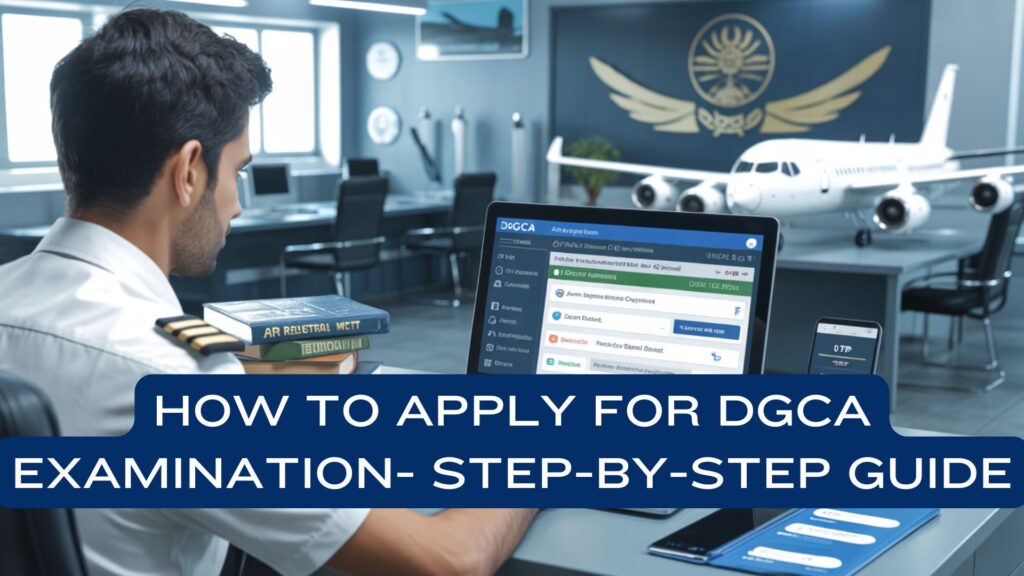
How to Apply for DGCA Pilot Examinations — Step-by-Step Guide

How to Apply for DGCA Pilot Examinations — Step-by-Step Guide A simple guide for student pilots on how to apply for DGCA CPL / ATPL exams through the DGCA Pariksha portal. Applying for DGCA exams is very straightforward once you understand the process. This guide explains exactly how to apply, how to select subjects, how to choose exam centres and how to download your admit card. Before You Start — What You Actually Need You only need two things to apply for DGCA exams: ✔ 1. A DGCA Computer Number This is mandatory for all candidates. If you don’t have one, apply first at: 🔗

Uncategorized

How to Convert Foreign CPL to Indian CPL

How to Apply for DGCA Pilot Examinations — Step-by-Step Guide Updated Requirements, DGCA Exams, Medicals, Flying & Logbook Upload Process. Introduction If you completed your Commercial Pilot License (CPL) abroad, you must convert it to an Indian CPL to fly professionally in India. The DGCA has a clear conversion process, but small mistakes—especially in recency, medicals, or exam timing—can cause big delays and extra cost. 1. Eligibility Requirements for Foreign CPL Conversion ✔ 1. Valid Foreign CPL from an ICAO Member State Must be issued by an ICAO contracting state. ✔ 2. Recency Requirement (IMPORTANT UPDATE) To apply for conversion, your recency must be: ➡ Minimum 15 hours of PIC flying within the preceding 6 months before the date of application. This is one of the most common reasons DGCA applications get delayed or unable to apply for CPL license conversion.. ✔ 3. English Language Proficiency (ELP) ICAO ELP must be present on the license or completed in India. ✔ 4. RTR Requirement (NEW RULE CLARIFIED) RTR Part 2 is mandatory for everyone. RTR Part 1 is exempted if flying was completed in a Commonwealth country (e.g., Canada, Australia, UK, New Zealand, South Africa). ✔ 5. Flight Experience Requirements Your logbook must include verified entries for: PIC Cross-country Night Instrument flying Skill tests Logbook must be authenticated with sign and stamps.  2. DGCA Medical Requirement (CRITICAL TIMING ADVICE) Step 2: Get Your DGCA Class 2 Medical (Before Flying Abroad) Strong Advice: It is highly recommended that candidates complete their DGCA Class 2 Medical BEFORE leaving India for flight training. Why? Because: Class 2 Medical certificate takes up to 3 months to be issued. If you return after flying and then start Class 2 → followed by Class 1: Your 6-month flying recency may expire, forcing you to return abroad just to redo minimum flying hours. ✔ This increases cost ✔ This causes unnecessary delays Best Strategy: ➡ Do DGCA Class 2 Medical before starting flight training abroad. ➡ After returning to India, you can apply directly for Class 1 Medical, and avoid the recency problem. This simple planning saves time, money, and prevents the need for additional flying abroad. 3. DGCA Exams Required for CPL Conversion If flying is done abroad, you must clear two DGCA exams: 1. Air Regulations 2. Composite Paper (Composite = Air Navigation + Air Meteorology) ⭐ Very Important Note: ➡ DGCA exam results are valid for 5 years from the date you passed the exam to the date you apply for the CPL conversion. ⭐ Highly Recommended Advice: ➡ You should complete DGCA exams BEFORE starting flying abroad. Why? You will save months after returning You can apply for conversion immediately No delay due to exam months Avoid recency expiration risk 4. Uploading Logbook & Required Certificates on eGCA This is a newly added step per your instructions. After finishing flying abroad, you must: Upload your entire verified logbook Upload all required certificates (flight experience, academic docs, foreign CPL, ELP, medicals, etc.) Ensure format, hours, and authentication stamps are clear Tip: Incorrect or incomplete logbook upload is one of the biggest reasons DGCA returns files. 5. Conversion Flying Requirements in India DGCA requires you to complete specific flying tasks in India: ✔ General Flying Test (GFT): Day ✔ General Flying Test (GFT): Night ✔ Instrument Rating Test (if applying for IR conversion) ✔ Cross-Country Requirement (IMPORTANT CLARIFICATION) For all cross-country flights: ➡ The first point of intended landing OR the point overflown must be more than 100 NM from the aerodrome of departure. This ensures proper cross-country navigation experience. ✔ Cross-country requirements generally involve: 250 NM Day cross-country 120 NM Night cross-country 6. Apply for Issue of Indian CPL on eGCA Once: ✔ Exams completed ✔ Medicals done ✔ Logbook uploaded ✔ Conversion flying completed You can now submit your application for: Indian CPL IR (if converting) SE/ME Ratings DGCA will issue your Indian CPL after verification. 7. Timeline & Cost Typical Time Required 3–6 months depending on exams, medicals, and logbook clarity. Costs Approx 5-6 Lakhs Include: DGCA exams Medicals Conversion flying Logbook verification DGCA processing fees 8. Final Tips (Must Read) Do DGCA Class 2 BEFORE going abroad. Give DGCA exams BEFORE flying abroad — saves time and avoids recency issues. Maintain 15 hours recency within 6 months. Ensure logbook entries are properly authenticated. Check that all certificates required for conversion are received from your training school abroad. Plan for RTR Part 2; check if Part 1 is exempt based on the country. Conclusion Converting a foreign CPL to an Indian CPL becomes simple when you understand DGCA’s exact requirements—especially medical timing, exam timing, and recency. By planning smartly and following the steps above, you can avoid unnecessary delays, cost, and extra flying abroad. This updated guide includes all 2025 DGCA rules so you can complete your DGCA CPL Conversion smoothly and start your career in Indian aviation.

Uncategorized

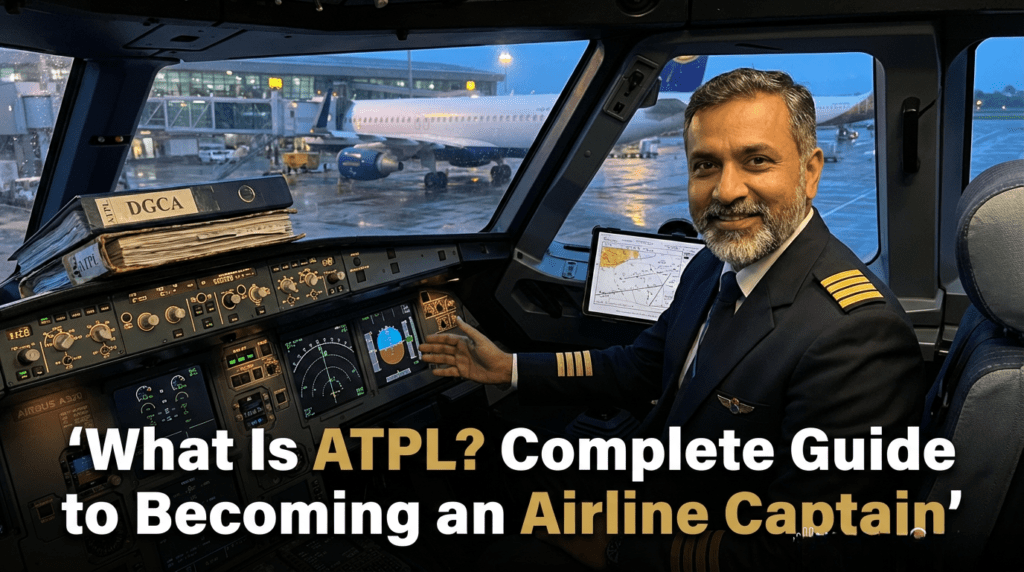
What Is ATPL? Complete Guide to the Airline Transport Pilot Licence in India

What Is ATPL? Complete Guide to the Airline Transport Pilot Licence in India The highest pilot licence, explained in simple words for Indian student pilots. What Is ATPL? (Easy Explanation) ATPL stands for Airline Transport Pilot Licence. It is the highest and most advanced pilot licence issued by DGCA and is required if you want to become an Airline Captain. A CPL allows you to work as a First Officer, but an ATPL allows you to take full command of an aircraft for commercial airline operations. In simple words: 👉 ATPL = Licence to become the Captain of an airliner. What Can a Pilot Do With an ATPL? With an ATPL, a pilot can: Fly as Pilot-in-Command (PIC) on commercial passenger flights Take complete responsibility for the aircraft, crew and passengers Make operational and safety-related decisions Fly large commercial aircraft like Airbus A320, Boeing 737, ATR etc. Earn a higher salary and hold senior positions in the cockpit ATPL represents the highest level of authority and responsibility in civil aviation. Difference Between CPL and ATPL (Simple Terms) A CPL is the licence you get after flight training and lets you start your career as a First Officer. An ATPL is what you earn later in your career once you gain experience, pass additional exams, and achieve the required flight hours. It allows you to become a Captain. Think of it like this: CPL = Entry-level licence → First Officer ATPL = Advanced licence → Captain Every commercial pilot ultimately works towards ATPL. When Do You Actually Need an ATPL? You do not need ATPL to join an airline. A CPL is enough for you to get a job as a First Officer. You need an ATPL when you: Want to be promoted to Captain Want to command flights Want to take full responsibility for the aircraft Want higher pay and seniority So ATPL is earned after you join an airline and gain flying experience. ATPL Requirements in India (DGCA) To apply for an ATPL, a pilot must meet the following DGCA requirements: ✔ 1. Minimum 1500 Hours of Flying Experience These hours must include specific categories such as PIC time, cross-country flights, instrument flying, night flying and commercial airline operations. ✔ 2. Valid DGCA Class 1 Medical ✔ 3. Passed All ATPL Theory Exams There are three subjects: ATPL Navigation ATPL Meteorology ATPL Radio Aids & Instruments These exams focus on advanced airline-level flying and systems. ✔ 4. Practical Experience in Commercial Operations Most pilots gain this experience while working as First Officers. Once all requirements are completed, DGCA approves and issues the ATPL. ATPL Exam Difficulty (What Students Should Know) ATPL exams are more detailed than CPL exams. They cover: Long-range airline navigation High-altitude and jet-stream meteorology Complex radio navigation systems Automation, instruments and airline-specific operations Many pilots attempt ATPL exams after building some flight experience, which makes them easier to understand. How Pilots Normally Get an ATPL (Career Path) Here is the typical journey for pilots in India: Complete 10+2 with Physics and Maths Clear Class 2 and Class 1 Medical Complete flying training and obtain CPL Join an airline as a First Officer Build flying hours (until you reach 1500+ hours) Pass all ATPL theory exams Apply to DGCA for the ATPL approval After ATPL is issued, the airline may upgrade you to Captain, depending on performance, seniority and training. ATPL Salary in India Pilots with ATPL earn the highest salaries in the airline industry. Captains earn significantly more than First Officers. Typical salaries range from: Around ₹4 to ₹8 lakh per month for Captains Even higher for Senior Captains, Instructors and Examiners Actual salary depends on the airline, aircraft type and years of experience. Do You Need ATPL Before Applying to Airlines? No. All Indian airlines accept fresh pilots with just a CPL. ATPL comes later in your career after gaining experience and flying hours. Final Summary: Why ATPL Matters ATPL is the final and most important licence in a pilot’s career. It represents: Leadership Skill Experience Responsibility Authority Every pilot aiming to become an Airline Captain must eventually earn an ATPL. If your dream is to sit in the left seat of an airliner and command flights, ATPL is your ultimate destination.

Uncategorized

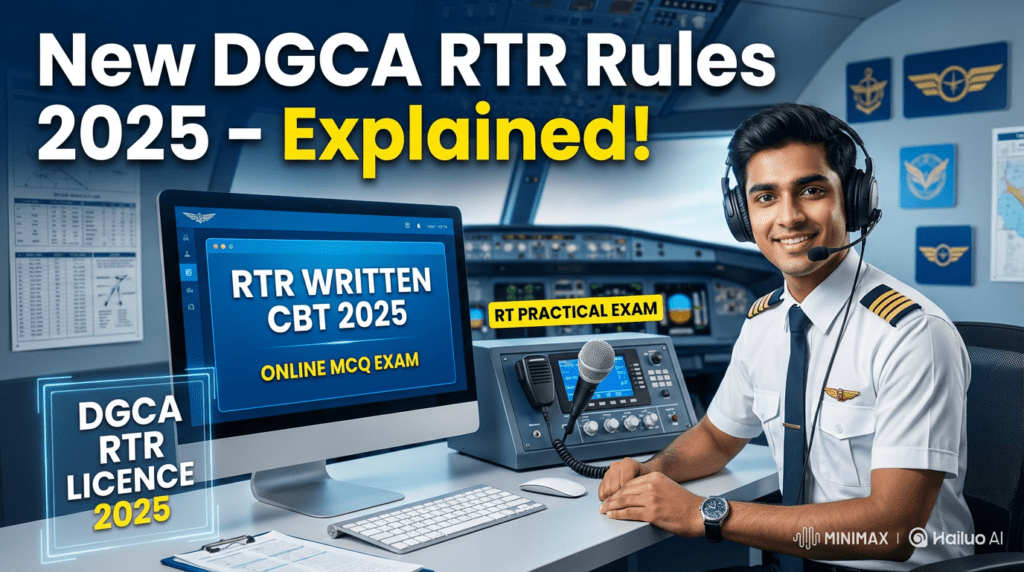
New DGCA RTR Rules 2025 Explained — Simple Guide for Student Pilots

New DGCA RTR Rules 2025 Explained — Simple Guide for Student Pilots DGCA has officially released the new RTR (Radio Telephone Operator Restricted) Rules 2025, and these rules completely redefine how student pilots will appear for the RTR Written Exam, Practical Exam, Certification & Licence. Earlier, RTR(A) was handled by the WPC wing of the Ministry of Communications. But from 2025 onwards, RTR for pilots in India is fully regulated, conducted, assessed and issued by DGCA. This blog explains the new rules in simple language, so every student pilot understands exactly what has changed and how to clear RTR in 2025. 1. What Has Changed in RTR 2025? Based on the PDF you uploaded: ✔ DGCA now controls the complete RTR exam & licensing The 2025 rules give DGCA full authority to conduct: Written exam Practical exam Certification RTR Licence issue  ✔ Written + Practical Exam structure introduced Earlier, the exam was mainly oral + practical, conducted by WPC. Now DGCA has split it clearly: Part A — Written exam (MCQ based) Part B — Practical exam (simulated RT environment)  ✔ Computer Number is mandatory Candidates must have a DGCA Computer Number to appear for RTR Written & Practical. ✔ All applications to be made on eGCA Including: Exemption requests Written exam Practical exam RTR Licence  ✔ New pass marks & validity Written: 70% passing, valid for 3 years  Practical: 50% passing 2. Eligibility & Exemptions (Important for CPL Students) DGCA allows some candidates to skip the written exam. ✔ Who is exempt from RTR Written Exam? According to DGCA Rules 2025, the following can skip the written exam: Indian Air Force, Navy, Army & Coast Guard pilots with 1500 hours experience Holders of valid old WPC RTR licence (1954 Rules) Pilots holding valid FRTOL or equivalent licence from Commonwealth nations or Philippines 👉 These candidates can directly apply for the Practical Exam through eGCA. ✔ Exemption validity Valid for 3 years 3. RTR Written Exam (NEW 2025 Pattern) ✔ Format Online Computer-Based Test (CBT) 50 MCQs Language: English ✔ Pass Mark 70% ✔ Syllabus Includes: Radiotelephony regulations ICAO Annex 10 procedures Q-codes & Phraseology Distress & Urgency Communication Meteorology codes Aircraft radio equipment regulations FIRs & frequencies General RT procedures Aerodrome, Approach & Area Control communication Emergency & failure procedures Navigation aids & radio principles This syllabus is now structured and clearly defined, unlike the older WPC system. 4. RTR Practical Exam (NEW DGCA Format) ✔ Eligibility You can appear for the Practical exam only if: You passed the written exam, OR You are exempted from the written exam ✔ How to Apply Through eGCA Portal: Register/login Select available practical exam slot Pay fees Download your admit card (available 3 days before exam) ✔ Exam Duration 30 minutes approx. ✔ What Happens in the Practical Exam? DGCA uses a simulated radiotelephony environment, testing: RT communication for all flight phases Ability to send & receive RT messages Knowledge of emergency procedures Familiarity with regulations & aviation communication rules Provisions for aeronautical mobile service & navigation ✔ Passing Marks 50% ✔ Attempts Allowed 3 attempts within written exam validity If all 3 attempts fail → candidate must reappear for written exam 5. Issue of RTR Certificate & Licence (New Process) Once you pass the Written + Practical, you must: Pay the RTR Licence fee on eGCA Submit your application online DGCA verifies your documents Your RTR Certificate & Licence is issued digitally on eGCA 6. Validity Extension (For Older Pilots) DGCA allows candidates above 80 years, or those seeking renewal, to extend validity if: They show 3 months’ experience in an aeromobile service station in the last year Renewal will be done yearly. 7. DGCA Requirements for RTR Training Organisations The new rules also define the standards for RT training centres (RTTO): They must provide: Approved instructors ATC–Pilot communication lab Flight simulation-based RT training Voice-recording system ICAO Doc 9432–compliant environment Quality assurance system 8. What This Means for Student Pilots (Simple Summary) ✔ RTR exam is now easier, structured & DGCA-managed ✔ No more WPC exam confusion ✔ Written exam is now MCQ, not oral ✔ Practical exam is simulated and aviation-focused ✔ Licensing is now fully digital on eGCA ✔ Clear syllabus + clear pass marks This is a big improvement for CPL/ATPL aspirants in India. Conclusion The DGCA RTR Rules 2025 bring long-awaited clarity and simplicity to the Indian pilot licensing system. With computer-based written exams, structured practical tests, exemptions for experienced pilots, and end-to-end processing through eGCA, the new RTR framework is modern, transparent and student-friendly. For every student pilot preparing for CPL/ATPL, this is the best time to begin RTR preparation.

Uncategorized

DGCA Class 2 Medical — Complete Guide for Indian Student Pilots

DGCA Class 2 Medical — Complete Guide for Indian Student Pilots (Requirements, Process & Tips) The ultimate  guide for student pilots applying for DGCA Class 2 Medical in India — with documents, approved doctors list structure, fees, timelines & expert tips. ✔ What You Will Learn in This Blog What is DGCA Class 2 Medical? Who needs a Class 2 Medical in India? Documents required for DGCA Class 2 medical Step-by-step process How to get your PMR (Permanent Medical Record) Common reasons for delay or rejection What is DGCA Class 2 Medical? DGCA Class 2 Medical is the first mandatory medical examination required for anyone who wants to become a pilot in India. Whether you’re applying for CPL, PPL, SPL, or drone pilot certification, the Class 2 medical is your entry point into aviation. This medical ensures that you meet DGCA’s physical and mental fitness standards before you start flying or apply for DGCA exams. Who Needs a DGCA Class 2 Medical? You need a Class 2 Medical if you are: A new student pilot (before joining a flying school) Applying for SPL / FRTOL Planning to apply for DGCA Computer Number Planning to start flight training for CPL/PPL A remote pilot (drone operator) requiring DGCA licensing Prerequisites — Before Booking DGCA Class 2 Medical Before you begin the medical process, make sure you have: ✔ Valid ID Proof (any one) Aadhaar Card Passport PAN Card Driving Licence Voter ID   ✔ Date of Birth Proof 10th Class Marksheet OR Birth Certificate OR Passport   ✔ Email ID & Mobile Number These must be unique and not used earlier on eGCA. ✔ Clear Passport-Size Photograph White background, recent, JPG/PNG. Documents Required for DGCA Class 2 Medical Here is the complete list of documents needed at the medical centre: 1. ID Proof Aadhaar / Passport / Driving License / Voter ID / PAN 2. Address Proof Aadhaar / Passport / Driving License / Voter ID 3. DOB Proof 10th Marksheet OR Passport 4. Passport-size Photographs 1–3 copies depending on the doctor 5. Medical History Records (if any) Past surgery documents Allergy information Chronic illness medication 6. Spectacles Prescription (if applicable) If you wear glasses/contact lenses, bring your latest power.Bring a separate pair of glasses or contact lenses. What Tests Are Done in DGCA Class 2 Medical? DGCA-approved Class 2 Medical Examiners conduct the following tests: ✓ Vision / Eye Test Distant & near vision Colour vision (Ishihara test) Eye muscle balance ✓ ENT (Ear, Nose, Throat) Hearing test Ear examination Nasal passage check ✓ Routine Blood Test CBC Blood sugar Kidney & liver markers (some centres) ✓ Urine Test ✓ ECG (Heart Test) ✓ Chest X-Ray (some centres suggest if required) ✓ BMI, Height, Weight Check ✓ General Physical Examination Step-by-Step Process — How to Apply for DGCA Class 2 Medical (2025 Updated) STEP 1 — Select a DGCA-Approved Class 2 Medical Examiner You can choose any DGCA-approved doctor across India.Search for: DGCA Class 2 Medical Examiner List (official DGCA website).Tip: Choose a doctor who uploads results to eGCA quickly. STEP 2 — Book Your Appointment Call or WhatsApp the medical examiner to book a slot.Most doctors give appointments within 3–10 days. STEP 3 — Visit the Clinic for Tests Carry your ID proof, photo, old prescriptions, and fee.Lab testing should be done only at NABL or NABH certified labs with QR code.The medical exam usually takes 1–2 hours. STEP 4 — Doctor Uploads Your Medical Report on eGCA After your medical is complete, the doctor uploads: Your medical results Your forms Your digital photo This creates your PMR (Permanent Medical Record) if it’s your first time. STEP 5 — DGCA Reviews & Issues Online Class 2 Medical Assessment Processing time: 3 to 15 days You will receive:✔ Class 2 Medical Assessment (PDF)✔ Visible in your eGCA Pilot Dashboard This medical certificate is valid for 2 years (for students under 40). DGCA Class 2 Medical Fees (Approx.) Test / Service Typical Cost in India Doctor Consultation ₹4,000 – ₹5,000 Blood Test + Urine Test ₹600 – ₹800 ECG ₹800 – ₹1000 X-Ray (if required) ₹600 – ₹800 Total Estimated Cost ₹7,000 – ₹8,000 How Long Is DGCA Class 2 Valid? Valid for 2 Years (for pilots under 40) After that, upgrade to DGCA Class 1 Medical for CPL flying Common Problems Students Face & How to Fix Them 1. PMR Not Generated → Ask doctor to check if documents were uploaded properly. 2. Medical Stuck “Under Review” → Usually cleared in 2–15 days. → Raise a ticket on eGCA if beyond 3 weeks. 3. Eye Power Too High DGCA allows moderate spectacle power; consult aviation ophthalmologists.

Scroll to Top
Call Now Button